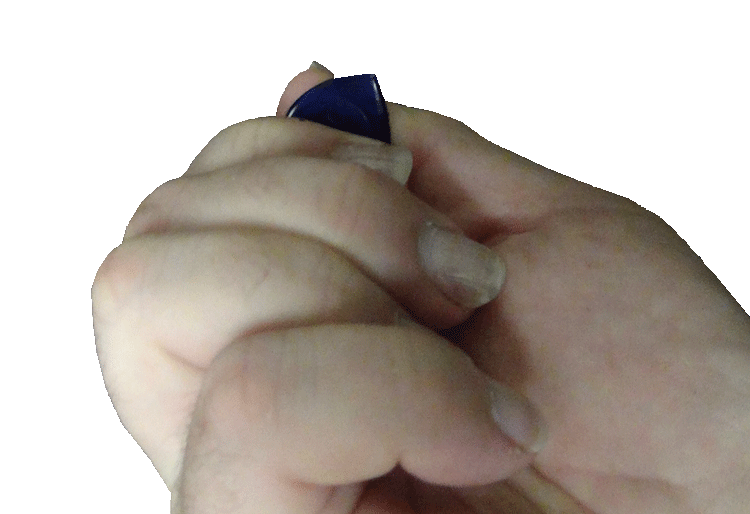
How to Hold a Guitar Pick
If you study the way good players hold their picks, plus study method books, as I have for a few decades, you find that there are only a couple of widely-accepted ways of holding a pick. I concluded after practicing with picks for many years, taking lessons from several teachers - plus teaching others how to hold them in countless lessons and classes - to use and recommend one particular way to hold a plectrum. (Plectrum is another word for pick).
Out of fairness, I want to be quick to write that there are good players who hold their picks differently than the way I am about to describe, so there's room for individual differences. For example, one of my former students used a very large pick and held it between his thumb and middle finger, which is quite unusual. However, he could sweep pick (a very fast way to play the individual notes in chords) with the best of them. So while I very highly recommend that you follow my directions below - mostly because I have decades of experience and training to back them up - you might find a way to hold a pick effectively that provides the exception to the rule.
I won't discuss much about how to choose a pick here, because I've covered it at length elsewhere. (You can find a more in-depth article about picks here.) In general though, I recommend smaller, thick picks, rather than bigger, thinner ones.
The Steps To Holding a Pick
Step One: Start with an extended index finger.
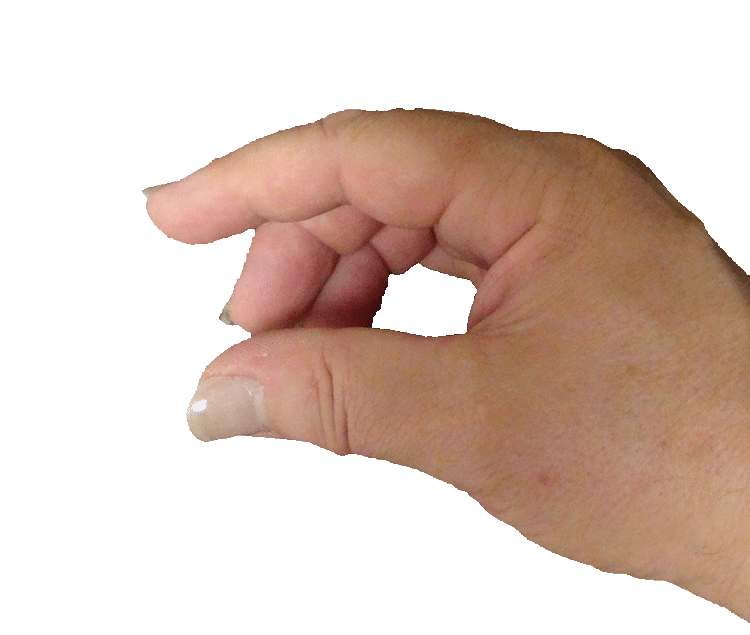
Step Two: Bend the two index finger joints nearest to the tip of the finger at nearly right angles.
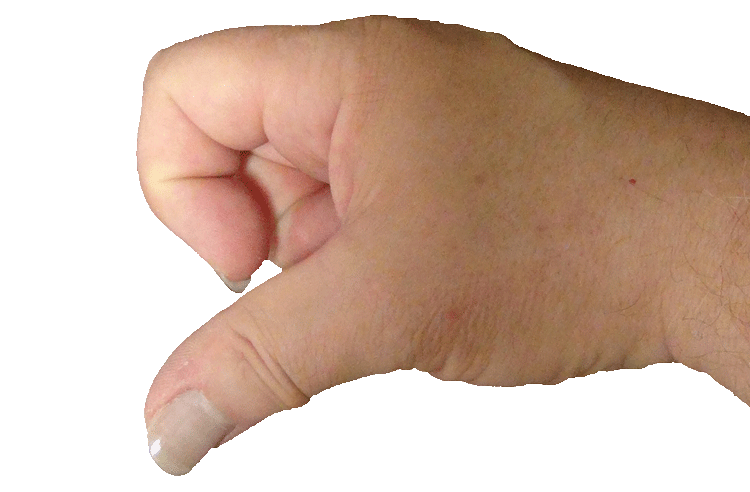
Step Three: Place the pick on the side of the tip segment of your index finger. This part is critical - the pick must be on the side of the finger (this is why you must bend the joints so extremely) and it should touch only the part of the finger that extends from the tip to the first joint. This latter step is why I recommend smaller picks. If the pick is too big it will touch the middle joint of the finger, which will make certain techniques, like circular picking, more difficult, if not impossible.
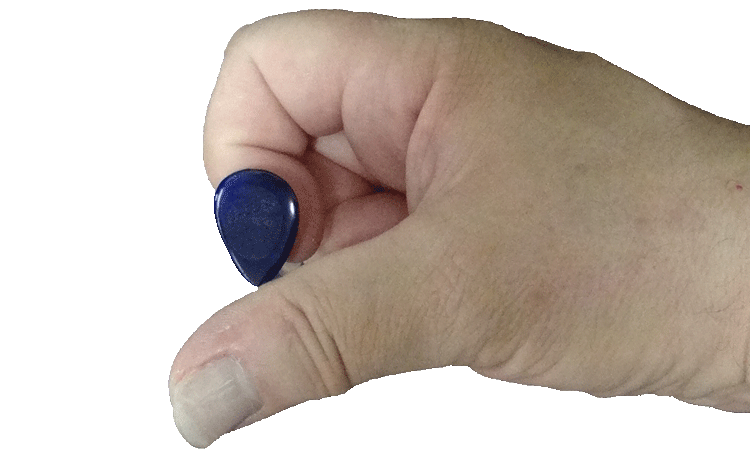
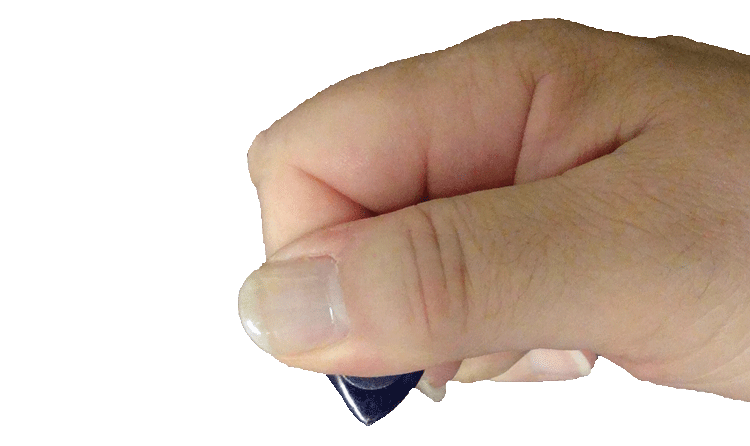
Step Four: Place the tip segment of your thumb (the part from the tip of your thumb to the first joint) against the pick to hold the pick between your index finger and thumb. The thumb should be extended with little or no bend in the joint. You may have to change the angle of the bends in your index finger so that the pick ends up touching only the tip segment of both finger and thumb. You should avoid bending the thumb joint very much. The point of your pick should point directly at your guitar. Very little of the point of your pick should actually stick out. Using a smaller pick will make this easier to do. (This is one of the reasons why I like small picks.)
One more thing: Your wrist should be relatively neutral. You should be able to place a flat object against the back of your hand, extending onto your forearm all the way to the elbow, without noticing much of a gap between the object and your forearm, wrist, and the back of your hand. Think of how you hold a suitcase: If you bend your wrist while doing that, you will notice more stress in the wrist. You should strive to maintain this neutral wrist when you strum. You can, however, bend the wrist in the same fashion that you would use to throw a dart (or probably cast a fishing rod or use a hammer - though I'm not a fisherman (and not much of a carpenter) so I can't speak definitively about these two skills). This type of wrist bend is used when you cock your wrist up and snap it down. I often tell my students to pretend they're throwing darts at the floor when they strum. (I'll be creating a web page with videos of this technique soon and add a link to it here later.)
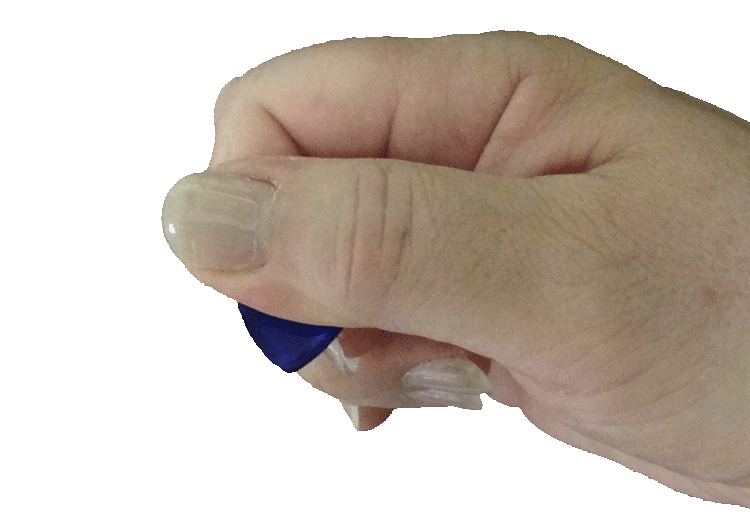
Here are pictures taken at two more angles.